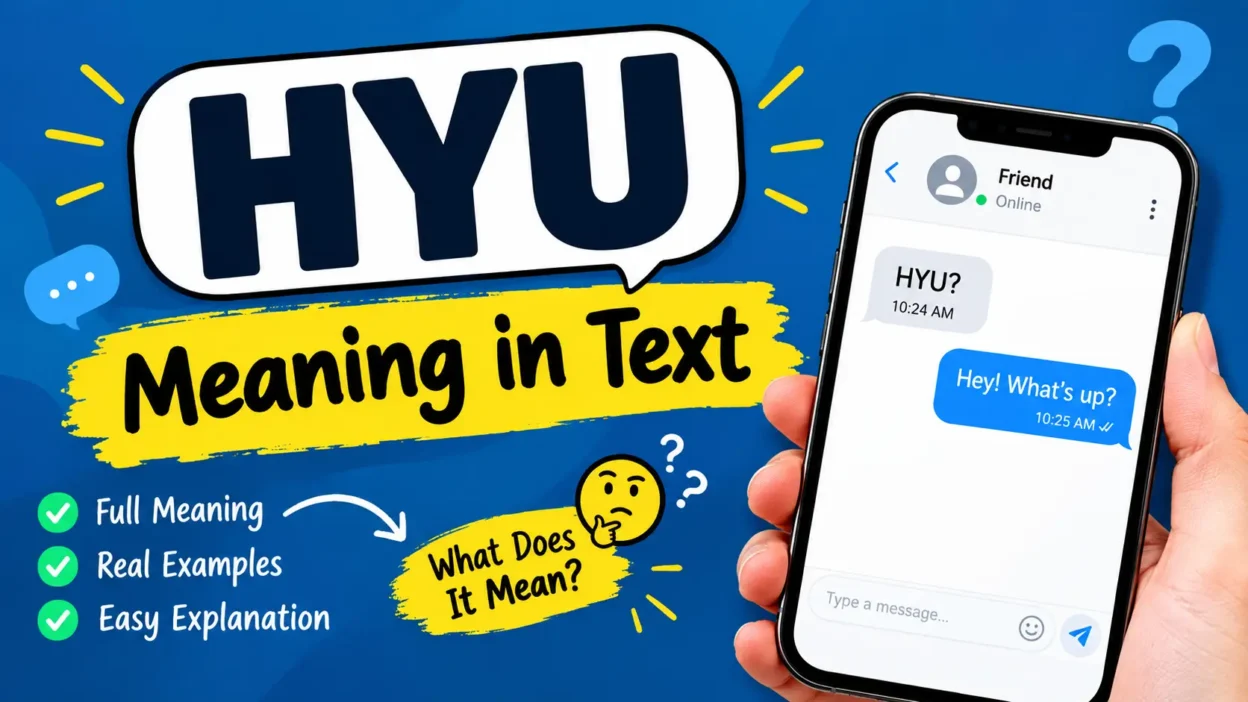
When someone suddenly texts you “HYU,” it can leave you wondering what they actually mean. Don’t worry, because HYU Meaning in Text is usually pretty simple.
In texting and social media conversations, HYU commonly means “Hit You Up,” which is another way of saying “I’ll contact you later” or “I’ll message you.
For example, someone might say, “I’m busy right now, but I’ll HYU tonight,” meaning they plan to get in touch with you later.
Quick Answer:
hyu almost always means “hit you up.” It is a casual way of saying “I’ll contact you later” by text, call, or message.
What Does “hyu meaning in text” Mean?
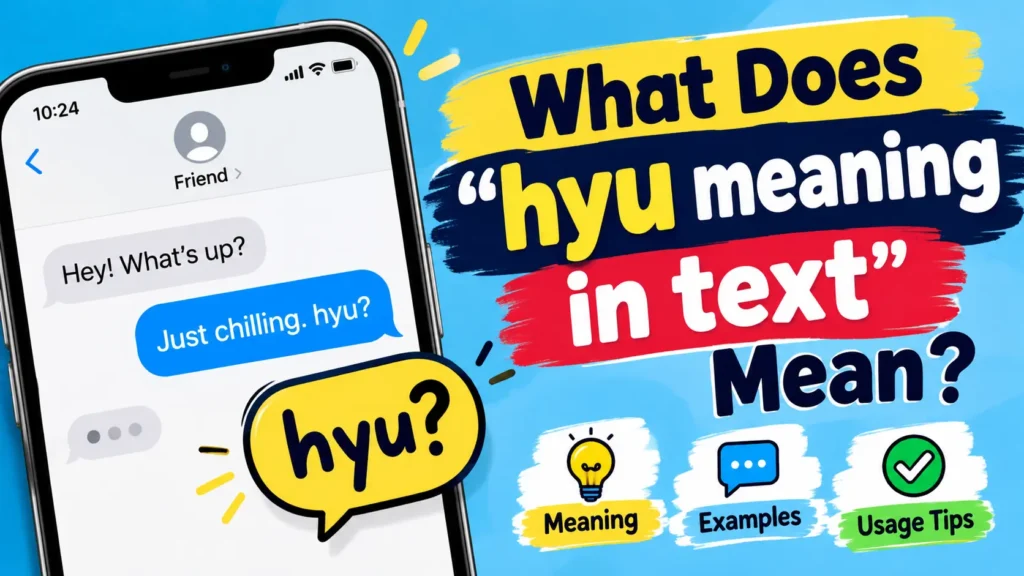
hyu is short for “hit you up.”
In plain English, “hit you up” means to contact someone. It does not involve any physical contact. It simply means reaching out later through a text, call, DM, or other message. When someone writes “I’ll hyu later,” they are promising to get in touch when they are free.
The most common meaning is a friendly plan to reconnect. It is informal and works best between people who already know each other. The tone is relaxed. It is not a formal appointment. It is more like “I’ll message you when I can.”
Sometimes people type it in lowercase as “hyu.” Sometimes they capitalize it as “HYU.” Both forms mean the same thing. The letters stand for the first sounds of the longer phrase, which makes it fast to type on a phone.
Meaning in Different Contexts
The core idea stays the same, but the exact feeling can shift slightly depending on where and how people use it.
Everyday Conversation and Text Messages
In regular texts between friends or family, hyu is a polite way to pause the chat. Someone might be driving, in class, or at work. Instead of disappearing, they say they will come back later. It keeps the door open without pressure.
Social Media
On platforms like Instagram, TikTok, or X (formerly Twitter), hyu often appears in DMs or comments when people want to continue a talk privately later. It can also show up when someone plans to share a link, photo, or update.
WhatsApp users treat hyu the same way as regular texting. It is common in group chats and one-on-one messages. People often pair it with a time: “hyu after dinner” or “hyu when I get home.”
Snapchat
On Snapchat the phrase feels extra casual. Snaps disappear, so hyu helps keep plans alive. Someone might send a quick snap saying “busy rn, hyu later” and then follow up with a longer chat.
In Instagram DMs, hyu works for both friends and new contacts. A person might reply to a story or post with “cool, I’ll hyu about that weekend plan.”
TikTok
TikTok comments and DMs use hyu when creators or fans want to talk more but cannot type a long reply right then. It is short enough for fast scrolling culture.
Gaming
In game chats or Discord, players say hyu when they need to step away. “Gotta grab food, hyu in 10” tells the team they will return soon. It keeps the group informed without long explanations.
Professional Communication
This is where hyu does not belong. Work emails, client messages, or formal chats need clearer language. Saying “I’ll hyu later” can sound too casual or even unclear. Better options are “I’ll follow up soon” or “I’ll reach out this afternoon.”
Internet Slang
As pure internet slang, hyu sits next to other contact phrases like HMU. It belongs to the family of shortcuts that grew with texting and messaging apps. Younger users and heavy texters use it most, but anyone can pick it up quickly.
Examples of “hyu meaning in text”
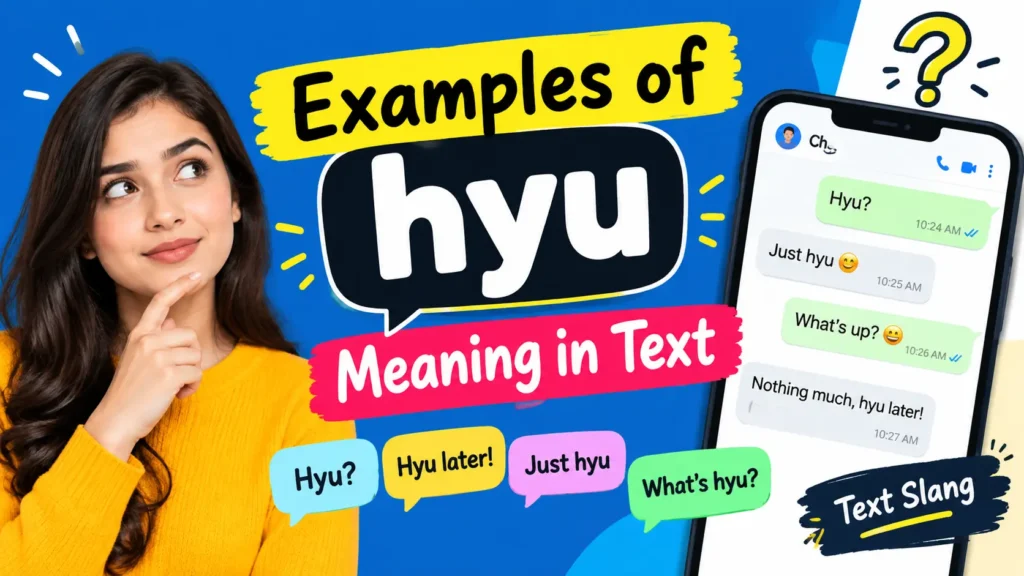
Here are five real-life style examples that show how the phrase works.
- Sentence: “I’m in a meeting right now. I’ll hyu after.” Meaning: The person will message or call once the meeting ends. Situation: Work or school setting where someone cannot talk freely.
- Sentence: “Movie night still on? Hyu when you’re free.” Meaning: Confirm the plan and ask the other person to reach out later. Situation: Friends making casual plans.
- Sentence: “Can’t talk on the train. Hyu when I get home.” Meaning: The sender is busy traveling and will contact later from a quieter place. Situation: Daily commute or travel.
- Sentence: “That was funny 😂 hyu later so we can finish the story.” Meaning: The conversation is paused but the speaker wants to continue it soon. Situation: Group chat or one-on-one banter.
- Sentence: “Busy with homework. Hyu tomorrow about the game.” Meaning: The person needs time for schoolwork and will reach out the next day. Situation: Students coordinating free time.
These examples show that hyu almost always points to future contact. The exact time may be clear (“after class”) or open (“later”).
When Do People Use “hyu meaning in text”?
People reach for hyu in a few common situations.
They are busy at the moment but still want to keep the conversation alive. They need a short way to say “I will contact you” without typing a full sentence. They are making light plans and do not need a formal calendar invite. They want to sound friendly and relaxed.
Who uses it? Mostly teens, young adults, and anyone comfortable with text slang. Friends use it with each other. Casual acquaintances use it after meeting at an event. Gamers and social media users use it in fast chats.
Why do people like it? It saves time. It feels modern. It shows the person still cares enough to promise a follow-up.
Appropriate times include chats with friends, family, or people you already know well. It works in group messages about fun plans. It is fine on social apps where everyone expects casual language.
Inappropriate times include job applications, emails to teachers or bosses, first messages to strangers in professional settings, or any place where clear, formal language is expected. In those cases the short form can create confusion or look careless.
Different Meanings of “hyu meaning in text”
The main meaning is clear: “hit you up.”
A smaller number of people sometimes use hyu as a quick “how are you?” or “hey you.” This happens mostly when the message starts a conversation and has a question mark: “hyu?” In that case the writer is checking in rather than promising future contact.
Context decides which meaning fits.
- If the message is about later plans or being busy → “hit you up.”
- If the message is an opener or greeting → possible “how are you.”
The “hit you up” meaning is far more common and consistent across reliable sources. When in doubt, look at the rest of the conversation. The surrounding words almost always make the intention obvious.
Origin of “hyu meaning in text”
The phrase “hit you up” has been part of casual spoken English for decades. It means to contact or approach someone. Some language observers note that older slang uses of “hit up” included asking for favors or even older drug-culture references, but in modern texting the meaning has fully shifted to simple contact.
As text messaging and instant chat grew in the 2000s and 2010s, people began shortening common phrases to type faster. “Hit you up” became “HYU” the same way “be right back” became “BRB” and “laughing out loud” became “LOL.” The initialism form (saying each letter) is typical of text slang.
No single inventor or exact year is recorded. Like most internet abbreviations, it spread through everyday use among young people and then moved into wider digital culture. Dictionary-style sites and slang collections now list it clearly as “hit you up,” confirming its place in modern informal English.
Similar Words and Alternatives
Several other short phrases live in the same neighborhood as hyu.
- HMU – “hit me up.” This is the reverse. You are inviting the other person to contact you.
- I’ll text you / I’ll message you – Clear full-sentence versions that work in any setting.
- Talk later / catch you later – Friendly closers that do not promise a specific contact method.
- BRB – “be right back.” This means a short absence, not a later contact.
- TTYL – “talk to you later.” Similar feeling but does not specifically mean “I will start the next message.”
The biggest difference is direction. hyu means “I will contact you.” HMU means “you contact me.” Choosing the right one keeps the conversation balanced.
Common Mistakes
People sometimes mix up hyu and HMU. Saying “hyu” when you mean “message me” can confuse the other person about who should write first.
Another mistake is treating hyu as a firm appointment. It is usually flexible. If you need a real time, ask for one.
Some readers assume it means “how are you” every time. That leads to odd replies. Always check the full message.
Using hyu in professional messages is another frequent error. It can make the writer sound too casual or unclear. Stick to complete sentences at work.
Tip: When you are unsure, just write the full idea. “I’ll message you later” is never wrong and always clear.
Frequently Asked Questions
1. What does hyu mean in text?
It means “hit you up,” or “I’ll contact you later” by message, call, or chat.
2. Is hyu the same as HMU?
No. hyu means the sender will contact you. HMU means the sender wants you to contact them.
3. Is hyu rude?
No. It is casual and friendly. Overusing it without following through can feel vague, but the word itself is not rude.
4. Can I use hyu at work?
It is better not to. Professional messages need clearer language such as “I’ll follow up soon.”
5. Does hyu mean how are you?
Sometimes people use it that way as a greeting, but the main and most consistent meaning is “hit you up.”
6. How should I reply to hyu?
A simple “Sounds good” or “Talk later” works. If you want a specific time, you can ask “When works for you?”
7. Is hyu used on Snapchat and TikTok?
Yes. On both platforms it usually means the person will message or snap you later.
Conclusion
hyu meaning in text is simple once you know it. Most of the time the three letters stand for “hit you up.” That is a friendly, casual promise to contact someone later by text, call, or message. You will see it in everyday chats, social media DMs, WhatsApp threads, Snapchat, Instagram, TikTok, and gaming chats. It helps people stay connected without long explanations when they are busy.
Context always matters. Look at the rest of the message and the relationship you have with the sender. The phrase is perfect for friends and relaxed conversations. It is not the right choice for formal or professional writing. Similar terms like HMU work in the opposite direction, so choosing the correct one keeps communication clear.

Ethan Carter is a passionate writer who creates simple, informative, and engaging content. He focuses on language, grammar, word meanings, and everyday expressions to help readers understand things clearly.