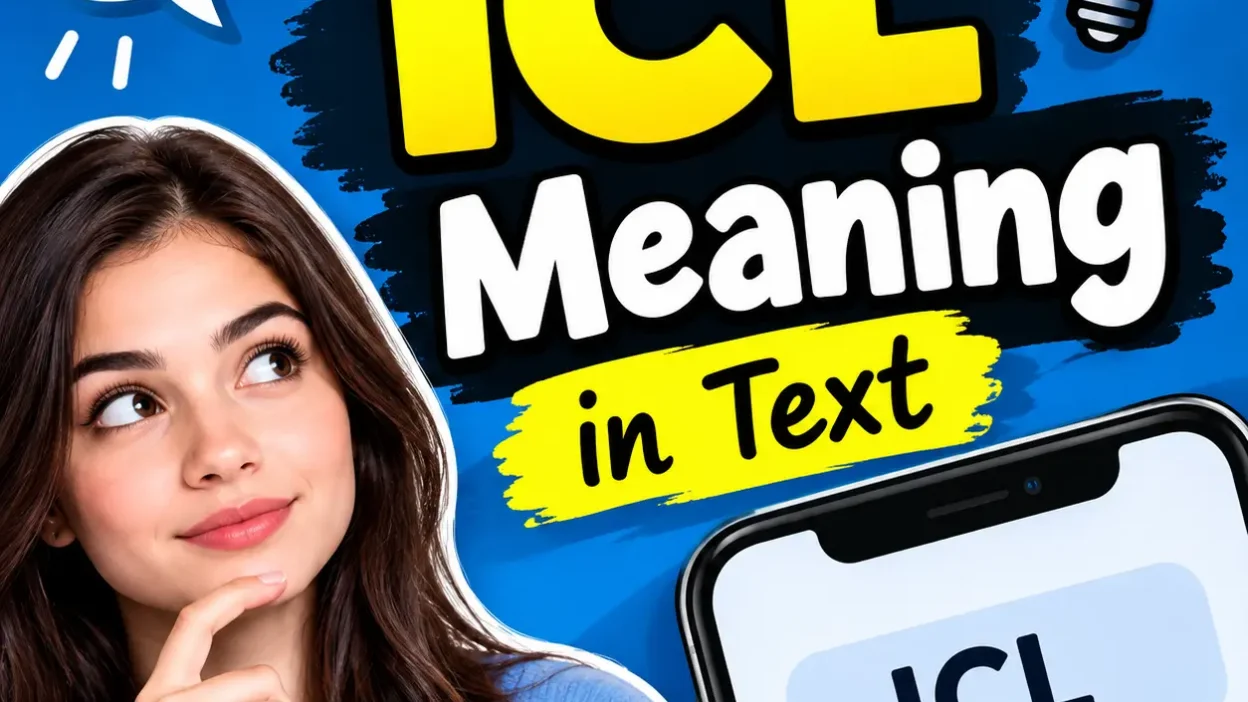
If someone suddenly sends you “ICL” in a text, you might pause and wonder what they are trying to say. Unlike common texting abbreviations such as LOL or BTW, ICL can feel confusing when you see it for the first time.
In texting and social media conversations, ICL usually means “I Can’t Lie.” People use it when they want to be honest about something, share their real opinion, or admit how they genuinely feel.
For example, a friend might text, “ICL, that movie was boring,” simply to make their honest opinion clear. Depending on the conversation, ICL meaning in text can sound serious, funny, casual, or even slightly emotional.
Quick Answer:
ICL means “I Can’t Lie.” People use it in text messages and social media to signal they’re about to share an honest opinion, a real feeling, or a blunt truth, just like saying “honestly” or “not gonna lie.”
What Does “ICL Meaning in Text” Mean?
In everyday texting, ICL stands for “I Can’t Lie.”
Think of it as a short way to say “I’m being real with you right now.” Someone types ICL right before they share what they actually think or feel. It softens the honesty a little while still making the statement feel genuine.
The literal meaning is straightforward: the person is claiming they are not able to (or choosing not to) lie about the thing they’re about to say. In practice it works almost exactly like “to be honest” or “not gonna lie.”
The most common meaning by far is this honesty marker. When you see ICL in a chat, nine times out of ten the person is about to keep it real.
Meaning in Different Contexts
The core idea stays the same almost everywhere, but the vibe can shift slightly depending on where you see it.
Everyday Conversation
In spoken English people have said “I can’t lie” for years. In text the shortened ICL keeps that same casual honesty. Friends use it when they want to admit something without sounding too serious.
Text Messages
This is where ICL feels most natural. It’s quick, low-effort, and fits the short style of texting. You’ll see it in lowercase “icl” just as often as “ICL.”
Social Media
On platforms built for quick reactions, ICL pops up in comments and captions when someone wants to sound authentic instead of fake-positive.
In group chats or private messages, people drop ICL before sharing opinions about plans, food, movies, or mutual friends. It keeps the tone friendly and real.
Snapchat
Snapchat is full of short, emotional messages. ICL fits perfectly in streaks and private snaps when someone wants to admit they’re tired, happy, or not feeling a certain vibe.
You’ll spot ICL in story replies, DMs, and comments under Reels. People use it to give honest compliments or gentle criticism about outfits, photos, or posts.
TikTok
TikTok comments love ICL. Creators and viewers both use it to react honestly to videos, “icl this sound is stuck in my head” or “icl that trend is over.”
Gaming
In Discord or in-game chats, ICL shows up when players admit a mistake, praise a teammate, or say a game mode is actually fun (or terrible).
Professional Communication
Almost never. ICL is pure casual slang. Using it in a work email or with a boss would feel out of place and unprofessional.
Internet Slang
Within online slang culture, ICL sits right next to NGL, TBH, and “no cap.” It’s part of the family of honesty signals that help people sound genuine in text.
Examples of “ICL Meaning in Text”
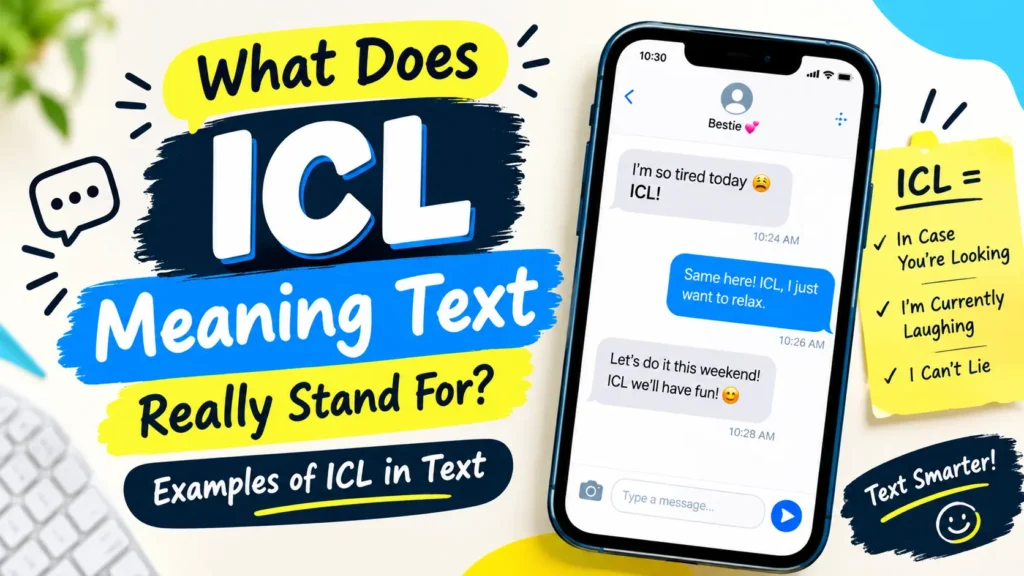
Here are five real-style examples so you can see exactly how it works.
- Sentence: “icl that new restaurant was mid” Meaning: Honestly, the restaurant was only average. Situation: Two friends texting after trying a hyped place.
- Sentence: “ICL you looked really good at the party” Meaning: I can’t lie, your outfit/style was great. Situation: A friendly compliment after an event.
- Sentence: “icl i’m too tired to go out tonight” Meaning: Honestly, I’m exhausted and don’t want to leave the house. Situation: Someone canceling or declining plans.
- Sentence: “icl that song is stuck in my head all day” Meaning: I can’t lie, the track is extremely catchy. Situation: Reacting to a TikTok sound or shared playlist.
- Sentence: “ICL I forgot we had a test tomorrow 😭” Meaning: Honestly, I completely blanked on the test. Situation: A student confessing to a classmate.
These examples show ICL can introduce praise, mild criticism, excuses, or simple admissions. The word after it carries the real weight.
When Do People Use “ICL Meaning in Text”?
People reach for ICL in everyday casual situations when they want to sound honest without writing a long sentence.
Common situations include:
- Giving an opinion about food, movies, music, or outfits
- Admitting they’re tired, busy, or not in the mood
- Softening a slightly negative comment
- Sharing a genuine compliment
- Confessing a small mistake or forgetfulness
Who uses it? Mostly Gen Z and younger Millennials, especially in the UK and online communities that follow British or internet slang. But it’s spreading fast, so you’ll see it from people of many ages who spend time on social media.
Why do they use it? Typing three letters is faster than “to be honest.” It also adds a casual, friendly tone that pure honesty sometimes lacks. It feels like the person is letting you in on the real thought instead of performing for the chat.
Appropriate times: private chats with friends, group chats, social media comments, gaming lobbies.
Inappropriate times: job applications, emails to teachers or bosses, formal customer service messages, or any situation where professional language is expected.
Different Meanings of “ICL Meaning in Text”
While “I Can’t Lie” dominates, a few other meanings appear in certain corners of the internet.
- I Can’t Lie (main meaning) Definition: Introducing an honest statement. Context: Texting, Snapchat, TikTok, Instagram. Example: “icl that movie was better than the trailer.”
- I Care Less (less common) Definition: Showing mild indifference. Context: Occasional U.S. slang use. Example: “icl about the drama, I’m staying out of it.”
- I Chuckled Lightly / I Couldn’t Help Laughing (rare) Definition: A soft laugh reaction. Context: Some older Urban Dictionary entries or niche chats. Example: “icl at that reply 😂”
- Non-slang meanings (not used in casual text)
- Imperial College London (university)
- Implantable Collamer Lens (medical eye procedure)
- In Christian Love (some faith-based sign-offs)
In normal texting conversations, you can safely assume “I Can’t Lie” unless the rest of the message clearly points somewhere else.
Origin of “ICL Meaning in Text”
The full phrase “I can’t lie” has existed in spoken English for a long time. People used it to introduce blunt or sincere comments long before smartphones.
The three-letter version ICL started gaining real traction around 2020–2022. It spread especially through UK slang circles, TikTok comments, Snapchat, and Gen Z group chats. As “not gonna lie” (NGL) became popular, ICL offered a shorter, slightly different-sounding alternative.
There isn’t one famous viral moment that launched it. Instead it grew the way most internet slang does, through constant everyday use until enough people understood it that others started copying it. Cultural background is pure digital-native communication: fast, casual, and focused on sounding real rather than polished.
Reliable dictionaries and slang trackers confirm the “I can’t lie” sense as the dominant modern meaning. Older or alternate definitions exist but have far less presence in current chats.
Similar Words and Alternatives
Several other abbreviations do almost the same job:
- NGL – Not Gonna Lie (very close in meaning and tone)
- TBH – To Be Honest (slightly more neutral and widely known)
- No Cap – No lie / I’m serious (stronger emphasis)
- FR – For Real (agreement or sincerity)
- Deadass – Completely serious (stronger and more regional)
Differences are mostly about flavor. ICL and NGL feel interchangeable to many users. TBH is a bit more formal-feeling. “No cap” carries extra energy and is often used after a statement rather than before it.
You can swap most of these without changing the core message, but the exact vibe shifts a little with each one.
Common Mistakes
People sometimes get confused about ICL. Here are the usual mix-ups and how to avoid them.
Incorrect usage: Thinking ICL always means something negative or sarcastic.
Correct usage: It simply flags honesty. The next words decide if the message is positive, negative, or neutral.
Incorrect usage: Using it in professional emails or with older relatives who don’t follow slang.
Correct usage: Stick to casual friend chats and social media.
Incorrect usage: Assuming every three-letter combo has only one meaning forever.
Correct usage: Always read the full sentence. Context is king.
Tip to avoid confusion: If you’re unsure, just ask “what does icl mean?” Most people are happy to explain. Or look at the rest of the message, if it sounds like an opinion or confession, it’s almost certainly “I can’t lie.”
Frequently Asked Questions
What does ICL mean in text messages?
It means “I Can’t Lie.” People use it to introduce an honest opinion or feeling.
Is ICL the same as NGL?
Yes, they are extremely close. Both signal honesty. ICL is “I Can’t Lie” and NGL is “Not Gonna Lie.”
What does ICL mean on Snapchat?
Same meaning, “I Can’t Lie.” It’s common in private snaps and streaks when someone wants to keep it real.
Is ICL rude?
Not by itself. It only feels rude if the statement that follows is harsh or unnecessary.
Can adults use ICL?
Absolutely. Anyone who texts casually can use it. It’s not locked to one age group.
Does ICL mean something different on TikTok?
No. On TikTok it still means “I Can’t Lie,” usually in comments or captions reacting to a video.
Should I use ICL in work chats?
Better not. Keep it for friends and informal social media. Professional settings prefer clear, full sentences.
Conclusion
ICL meaning in text is simple once you know it: “I Can’t Lie.” It’s a quick, friendly way to say “honestly” or “I’m being real with you” in messages, Snapchat, TikTok, Instagram, and everyday chats. People use it to share opinions, admit feelings, give compliments, or soften a blunt truth without typing a long phrase.
The meaning stays consistent across most platforms, though it belongs only in casual conversationsnot, professional ones. Similar terms like NGL and TBH do almost the same job, so you have options. Always look at the full message for context, and you’ll never misread it.

Daniel Scott is a dedicated writer who creates clear, engaging, and helpful content. He focuses on language, grammar, word meanings, and everyday expressions, helping readers find simple and useful answers.